
ENGLISH – ESPAÑOL
Shall we start from the very beginning?
Well, it all comes back to Rome and Greece. Most historians and fashion journalists claim the very first records of clothing ever found date back to ancient times.
Some things to bear in mind:
– these people (Romans and Greeks) kept artistic records of important events, which typically involved people from the highest layers of society.
– as I’ve just mentioned, they produced statues, did pottery and mosaic work. Many of them were lost, remember we’re talking about 600 b.C, so there isn’t much information. But…
Empecemos desde el comienzo.
Bueno, todo se remonta a Roma y a Grecia. La mayoría de lxs historiadores y periodistas de moda afirman que los primeros registros de indumentaria que se encontraron datan de tiempos antiguos.
Algunos puntos a tener en cuenta:
– esta gente (lxs romanxs y lxs griegxs) llevaba registros artísticos de los eventos importantes, que incluían generalmente a la gente de la alta sociedad.
– como ya dije, hacían estatuas, cerámica y mosaiquismo. Muchas de estas piezas se perdieron, recuerden que estamos hablando del 600 a.C, así que no hay mucha información. Pero…
One major point in common between Rome and Greece is the fact that they care too much about textiles and their production. We’ll see that it was at this time when sumptuary laws appeared for the first time. Lower-class people couldn’t wear certain clothes as they were meant to be worn by rich people and the clergy.
Draping and pleating were the main tailoring methods. They used linen and silk.
As far as the Romans go, they wore tunics and togas. Sizes vary according to the social layer you belonged to as well as colors and embellishments. Colors such as yellow and purple or violet were hard to get and so, only people who could pay for the dying processes had access to them.
Men wore chitons and women wore peplos.
Un punto importante en común entre Roma y Grecia es que se dedicaban con detalle a los textiles y a su producción. Vamos a ver que durante esta época aparecieron las primeras leyes suntuarias. Las personas de clase social baja no podían vestir ciertas prendas porque estas eran reservadas para la gente rica y el clero.
El drapeado y el plisado fueron los principales métodos de confección. Usaban lino y seda.
Con respecto a lxs romanxs, usaban túnicas y togas. Los tamaños variaban según el lugar que ocupaban en la sociedad así como también los colores y las decoraciones. Los colores como el amarillo y el morado y el violeta eran difíciles de lograr, y por esa razón solo las personas que podían pagar por los procesos de teñido accedían a ellos.
Los hombres usaban quitones y las mujeres peplos.

This statue shows a man wearing a tunic (barely visible at the bottom) called chiton and a toga on top of it.
We see layers and layers of clothes overlapping.
Esta estatua muestra a un hombre en una túnica (apenas se puede ver en los pies) llamada quitón y una toga arriba.
Vemos que hay capas y capas de ropa superpuesta.
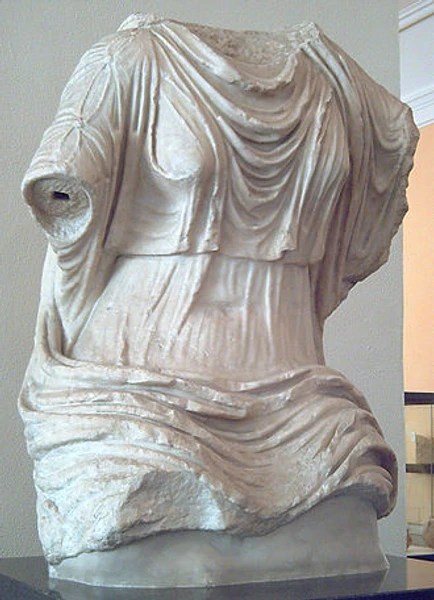
Sculpture of a woman wearing a people and a stola (top).
Escultura de una mujer en un peplo y una estola (top).
Regarding Greeks, they also wore chitons and peplos but they had another garment called himation that was worn on top of tunics. It played the role of a cloak.
Lxs grigxs también usaban quitones y peplos pero tenían otra pieza: el himation, que se usaba arriba de las túnicas. Vendría a ser como una capa.
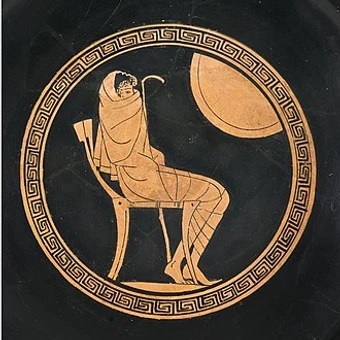
This picture depicts a person wrapped in a himation, typically made of wool.
En esta imagen vemos a una persona envuelta en un himation, generalmente de lana.
Now comes the most interesting part, Roman and Greek clothing is ubiquitous in fashion history. Designers come back to their styles all the time.
Renowned houses:
Ahora viene la parte más interesante, la indumentaria romana y la griega han sido omnipresentes en la historia de la moda. Lxs diseñadores vuelven a sus estilos todo el tiempo.
Casas reconocidas:
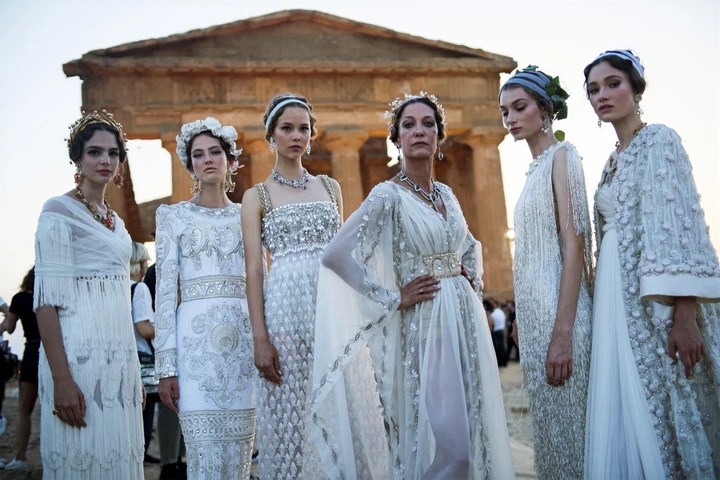
Dolce & Gabbana FW 2019 at the Valley of the temples.
Dolce & Gabbana FW 2019 en el Valle de los templos.
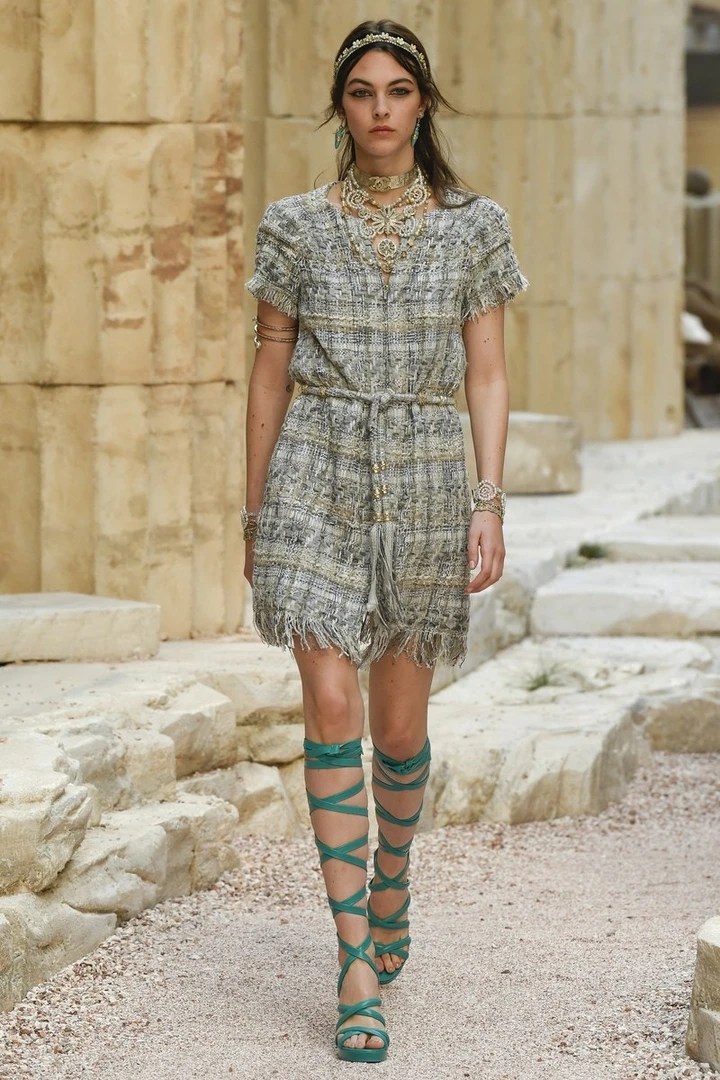
Chanel Resort 2018 by Karl.
Chanel Resort 2018 por Karl.
Masters of tailoring:
Maestrxs de la sastrería:

Madeleine Vionnet. 1920.
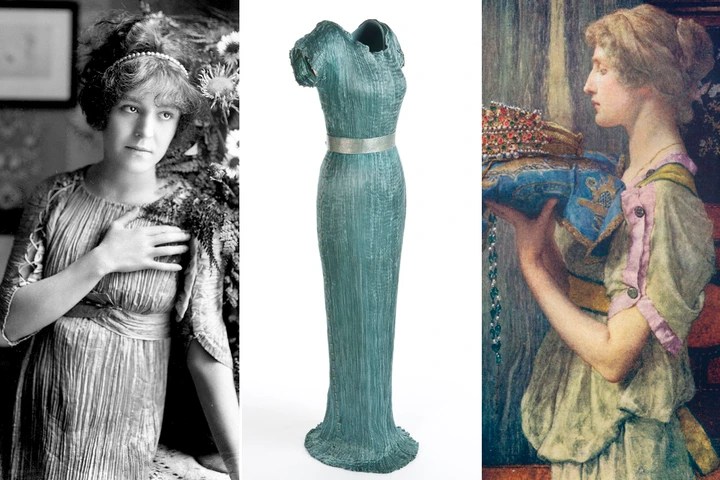
Mariano Fortuny «Delphos». 1920.

Vera Wang Spring ready-to-wear 2008.
Independent houses:
Casas independientes:
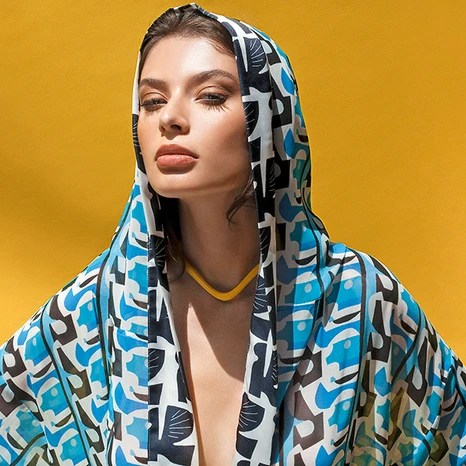
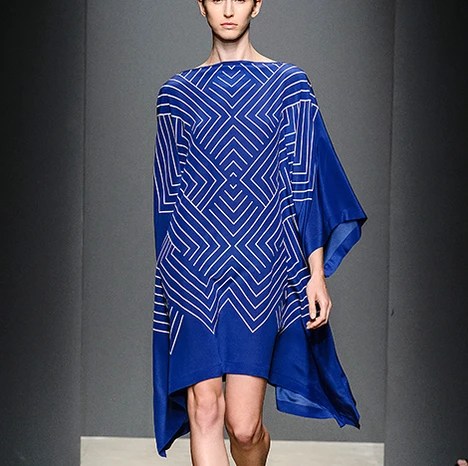
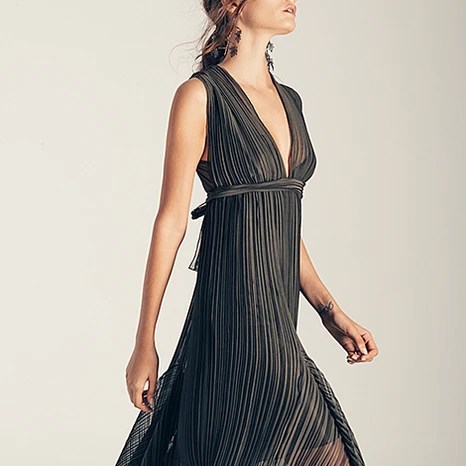
Konstantina. Ancient Kallos. Angelo Bratis.
Thanks for reading 💖
Gracias por leer 💖
@devilwearsprada_____
 devilwearsprada